Block Bloom: Color Blast
Nebula StudioPuzzle
4.9126.00 Reviews
- Version
- 1.0.5
- Installs
- 100.00K
- Age Rating
- Everyone
Screenshots
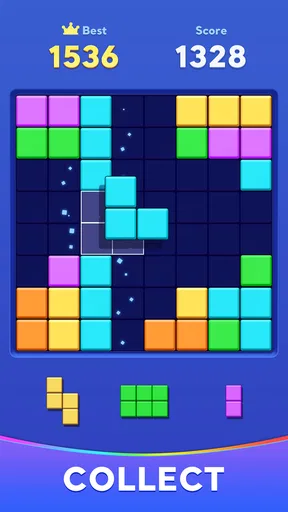
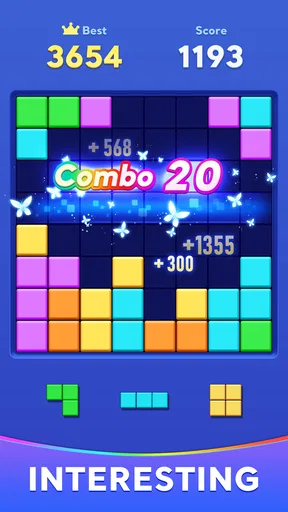
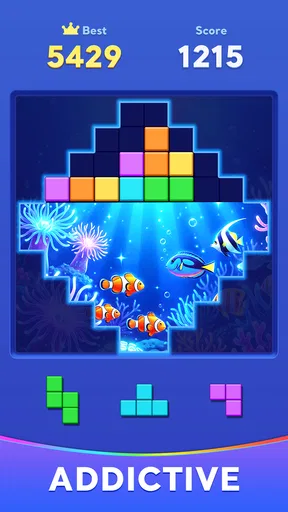
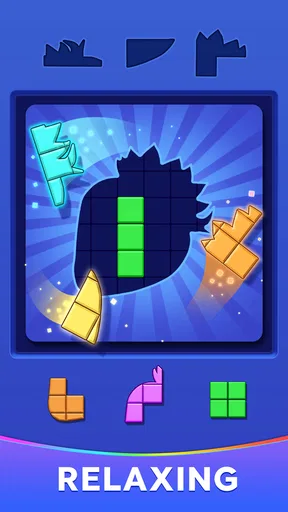
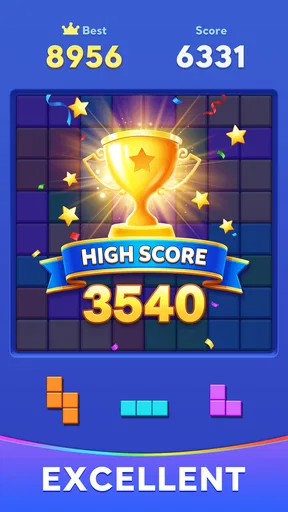
Our Review of Block Bloom: Color Blast
 Analysis by Appyee
Block Bloom: Color Blast is the sort of puzzle game I can open for a few quiet minutes without needing to learn a complicated system first. The basic idea is immediately readable: place colored blocks, complete lines, and clear space before the board becomes difficult to manage. That simplicity is the reason it feels inviting during the first week, but it also creates the main question I had while reviewing it: does the calm, repeatable format remain interesting after the first burst of novelty?
My answer is cautiously positive. I enjoyed the low-pressure rhythm, especially when I wanted something more focused than scrolling but less demanding than a story-driven game. At the same time, this is not a puzzle adventure with a campaign, characters, or a large collection of mechanics. Its value depends on whether you like improving small decisions over repeated sessions. If that sounds satisfying, Block Bloom can earn a regular place on your phone. If you need constant surprises or a clear sense of progression, its appeal may fade sooner.
Why the first week feels so approachable
The opening experience is built around a familiar visual puzzle language. Blocks arrive, the board gives me a limited amount of room, and clearing complete lines creates the satisfying release that keeps the next move tempting. I never felt buried under instructions. That matters for a game designed for short breaks because the time between launching it and making a meaningful move is very small.
I found the color-based presentation helpful rather than distracting. The pieces are easy to distinguish at a glance, and the act of fitting them together gives each turn a clear purpose. The game’s store summary describes it as relaxing, and that is a fair description of its mood. The relaxed feel comes less from elaborate atmosphere and more from the absence of unnecessary friction: I can concentrate on the board instead of managing a complicated menu or learning a long list of rules.
During the first few sessions, the strongest hook is the balance between planning and improvisation. A promising arrangement can suddenly become awkward when the next shape does not fit where I wanted it. That forced me to stop treating every move as an isolated placement. I started leaving flexible gaps and avoiding attractive clears that would split the board into unusable pockets.
That is one of the first useful lessons I took from it: clearing a line is not always the best immediate move. Sometimes preserving a broad open area gives me more options than removing a single row or column. New players may naturally chase every available clear, but the board generally rewards patience. I had better runs when I considered where the next two or three pieces might go instead of celebrating the first obvious match.
The game is free, and its Everyone content rating makes it easy to recommend for shared devices and casual family play. Nebula Studio is the developer behind it, and the current version is 1.0.5. It has already passed 100K+ installs and carries a 4.9 average from around 11K ratings, which suggests that its straightforward format is connecting with a broad audience.
Those figures tell me that Block Bloom is not an obscure experiment that only works for a narrow group of puzzle fans. Still, popularity does not remove the need to test its staying power. A simple game can attract attention quickly and then become repetitive if its central decision never develops. The first week is therefore the easy part: the controls are understandable, the rounds are approachable, and the colorful clears provide an immediate reward.
A realistic everyday use case
I can see myself using it while waiting for an appointment, sitting on public transport, or taking a short break between tasks. One particularly good situation is the end of a busy workday, when I want to switch mental gears but do not have the energy to follow a plot or compete against other players. Block Bloom gives me a small problem to solve without asking me to remember a complicated objective.
It also works well as a buffer between activities. I can play one session, put the phone down, and return later without feeling that I have abandoned a long quest. That makes it more practical than many puzzle games that depend on daily streaks, timed events, or a constant stream of notifications. The trade-off is that there is less external motivation. The game has to hold my attention through the quality of its board decisions, not through a large reward structure.
The difference between relaxing and effortless
Relaxing does not mean completely mindless. Early placements feel forgiving, but careless stacking can still leave me with a cramped board. I appreciated that the game allows a gentle learning curve through failure: I can see exactly how my earlier choices created the problem. That clarity makes a lost run feel more like feedback than punishment.
For the best first-week experience, I recommend resisting the urge to fill every empty space immediately. Keep the center and at least one side adaptable, and avoid building tall uneven towers unless a clear payoff is visible. This is not a hidden mode or a special feature; it is simply the strategic habit that makes the game feel deeper than its short description suggests.
What remains after the novelty fades
After the first month, Block Bloom’s value depends on whether repeated optimization is enough for me. The core loop does not need much maintenance. I do not have to study a complicated build, collect a large roster, or remember a sequence of objectives. I can return after several days and understand the game again almost instantly. That low re-entry cost is one of its most durable strengths.
For a casual player, this creates a useful habit. A short session can become a small daily reset: open the game, assess the available pieces, make careful placements, and stop when the board no longer feels enjoyable. I like that the game does not require a large time investment to feel complete. It is easy to fit around real life rather than organizing the day around it.
However, the same simplicity limits long-term variety. The familiar block-and-line structure is satisfying because it is consistent, but consistency can become predictability. If I am looking for new objectives, a narrative reason to continue, or a sequence of increasingly unusual challenges, this is not the strongest choice. A more feature-heavy puzzle game would probably offer a richer sense of progression.
The best comparison is with the usual block-placement and line-clearing alternatives. Block Bloom has the advantage of being immediately readable and emotionally light. It feels closer to a quiet tabletop exercise than to a competitive arcade title. Games with timers, opponents, or elaborate power-ups may create more urgency, but they can also make a short break feel like another task. I would choose Block Bloom when I want control over the pace, and a faster arcade puzzle when I want pressure.
Against match-three games, the difference is also important. Match-three titles often guide attention toward creating chains, special pieces, and quick visual reactions. Here, I spend more time thinking about space management. That makes Block Bloom a better fit for someone who enjoys arranging shapes and protecting future options. Someone who prefers frequent explosions, level goals, and obvious rewards may find the board too quiet.
How I would build a sustainable routine
I would not treat this as a game that needs to be played for long stretches. Its recurring value is stronger when sessions stay short enough for the board to remain mentally fresh. One practical approach is to stop after a satisfying clear rather than continuing until frustration takes over. That preserves the feeling that I chose to play, instead of turning the game into a repetitive obligation.
Another useful habit is to change the goal from “survive as long as possible” to “make better openings.” In one session, I might focus on keeping the board low. In another, I might practice leaving a broad channel for awkward pieces. This gives the same mechanics different mental targets without pretending that the game contains a large set of separate modes.
I also found that reviewing a failed board for a moment is more useful than instantly restarting. The important question is not only which piece caused the problem, but which earlier placement removed my flexibility. That small review turns casual play into a form of pattern recognition and gives the game more lasting substance than simply chasing another attempt.
Where the maintenance burden stays low
Block Bloom is easy to maintain as a regular app because the commitment is small. There is no need to keep up with a long campaign, coordinate with other players, or preserve a complicated strategy between sessions. The game’s current version, 1.0.5, is also straightforward to understand from the moment I return to it. For a phone game, that simplicity is valuable: I can spend my limited attention on play rather than upkeep.
That low burden does not mean every player will experience it as effortless. People who become highly score-focused may start replaying boards long after the relaxing quality disappears. The game can then become a test of patience, especially when a sequence of awkward pieces interferes with a carefully prepared area. I would recommend setting a natural stopping point if the goal is relaxation.
The free price makes experimenting easy. I can install it, try several sessions, and decide whether the loop suits me without making a financial commitment. That is particularly useful for families or for anyone who wants a simple offline-style pastime on a spare device, although the experience is best judged by personal tolerance for repetition rather than by the rating alone.
The sources of fatigue
The largest possible weakness is repetition in the central action. Placing blocks and clearing lines can remain pleasant for a long time, but it does not transform into a fundamentally different activity. Once I understand the most reliable habits, some sessions begin to feel like variations on a familiar exercise instead of fresh puzzles.
Fatigue is also more likely when I play beyond the game’s natural scale. Block Bloom works well as a compact break, but extended sessions expose the limited range of its basic loop. I would not choose it as my only game for a long journey unless I already knew that I enjoyed this kind of repetition.
Another trade-off is the lack of urgency. The calm pace is a benefit for people who dislike timers, yet it removes the adrenaline that keeps competitive puzzle games exciting. Players who want leaderboards, head-to-head tension, or dramatic comeback moments may feel that the game is too restrained. I would skip it for that reason if competition is the main thing that makes puzzle games enjoyable for me.
Color-based play can also demand a little more attention than a purely shape-based system. I found the pieces readable, but anyone who relies heavily on shape distinction rather than color should take a moment to see whether the visual design feels comfortable. The Everyone rating makes the game broadly approachable, but a general age rating does not guarantee that its visual presentation will suit every player equally.
Who should make room for it
I would recommend Block Bloom to someone who wants a free, gentle puzzle game for short sessions and enjoys making careful spatial decisions. It is especially suitable for players who like the familiar satisfaction of line clears but do not want timers, complicated progression, or a demanding competitive environment.
It is less suitable for anyone who needs a strong sense of discovery. If I want a story, a campaign with varied objectives, or a steady stream of new mechanics, I would choose a more expansive puzzle title. Likewise, players who lose interest once they understand a game’s main pattern may enjoy the first week but not keep it installed for the long term.
The game’s 100K+ installs and 4.9 average from around 11K ratings indicate that many players appreciate its accessible approach. I see those numbers as a useful sign of broad appeal, not as proof that it will suit every taste. The real deciding factor is whether I enjoy improving board discipline: leaving room, accepting a less attractive immediate move, and thinking ahead without pressure.
My long-term verdict
After looking beyond the initial color bursts, I think Block Bloom earns lasting space for the right kind of player. Its strongest quality is not novelty but reliability. I can return after a gap, understand the board immediately, and enjoy a focused session without maintenance or preparation. That makes it a dependable small habit rather than a game I need to constantly manage.
Its limitation is equally clear: the long-term experience rests on one central puzzle rhythm. The game does not need to become something larger to be worthwhile, but I do need to accept that repetition is part of the design. For me, that is a fair trade when I want calm concentration. For someone seeking constant variety, it would be a reason to move on.
My final recommendation is to treat it as a compact mental reset, not an endless content-driven game. Use the open spaces deliberately, stop before relaxation turns into frustration, and judge its staying power over several short sessions rather than one long test. Released on Jun 30, 2026, Block Bloom: Color Blast is a free puzzle game from Nebula Studio with a clear identity: simple, colorful block placement for players who value an easy return and a quiet challenge. I would keep it installed for those breaks when I want to think a little, compete with nobody, and leave the phone feeling refreshed rather than overstimulated.
Verdict
Strengths of Block Bloom: Color Blast
- Simple color-matching rules make it easy to learn quickly.
- Short levels fit well into quick breaks or casual play.
- Bright visuals give the board a cheerful, polished appearance.
- Gradual challenges help maintain interest without feeling overwhelming.
- Offline play makes it convenient when no internet connection is available.
Limitations of Block Bloom: Color Blast
- Later stages can feel repetitive once the core mechanics become familiar.
- Some boosters may be difficult to earn without watching ads or replaying levels.
- Limited strategic depth may disappoint experienced puzzle-game players.
- Progress can feel slower if you avoid optional purchases and advertisements.
- Small visual effects may become distracting during longer play sessions.
Other Releases by Nebula Studio
View All


Similar Picks in This Category
View All
Block Blast!
HungryStudio4.8

Braindom: Brain Games Test
Lahana Game Studio4.6

AMAZE!
CrazyLabs LTD4.6

Sudoku - Classic Sudoku Puzzle
Oakever Games4.7

Art Puzzle - Puzzle Games
Easybrain4.8

Amaze GO!
Oakever Games4.9
Frequently Asked Questions
What is Block Bloom: Color Blast and how is it played?
Block Bloom: Color Blast is a casual puzzle game centered on placing and matching colorful blocks on a game board. The usual objective is to complete rows, columns, or specific color combinations to clear pieces and earn points. It is designed for short sessions, with simple controls that are easy to understand but increasingly challenging decisions as the board fills up.
Is Block Bloom: Color Blast free to download and play?
Block Bloom: Color Blast can generally be downloaded without an upfront purchase, allowing players to try the core gameplay for free. However, the app may include advertising, optional in-game purchases, or both. These extras can sometimes remove ads, provide useful items, or support progress, but they are not necessarily required to enjoy the basic puzzle experience.
Does Block Bloom: Color Blast work offline?
The main puzzle gameplay may be available without a constant internet connection, which makes Block Bloom: Color Blast suitable for playing during commutes or when mobile data is unavailable. Nevertheless, certain features—such as advertisements, cloud-related services, leaderboards, events, or purchase verification—may require internet access. Availability can also vary depending on the version and device.
Is Block Bloom: Color Blast suitable for children?
Block Bloom: Color Blast uses colorful visuals and straightforward matching mechanics, so it can be approachable for children and casual players. Parents should still review the app’s age rating, advertising behavior, and in-app purchase settings before allowing unsupervised play. If the game displays third-party ads or offers purchases, parental controls are recommended to help prevent accidental interactions.
Does Block Bloom: Color Blast become difficult, and are there hints or power-ups?
The game is easy to start, but later stages or longer sessions can become more demanding as available space decreases and objectives become harder to complete. Depending on the version, players may have access to boosters, special blocks, extra moves, or hint-style assistance. These tools can help in difficult situations, although some may be limited or connected to optional rewards and purchases.
Play our best games!


